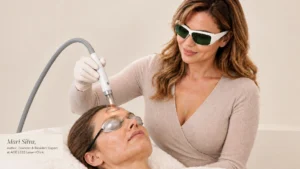

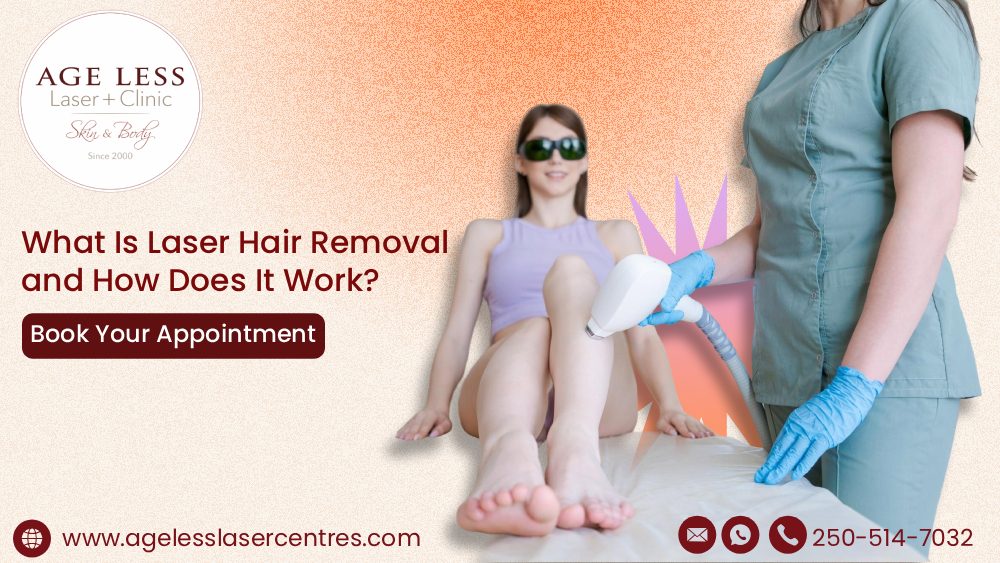
Laser hair removal is a treatment that uses concentrated light energy to target hair follicles and reduce future hair growth. The laser focuses on pigment inside the follicle, heating it in a controlled way that disrupts regrowth over time.
If you’ve been wondering what is laser hair removal, or does laser hair removal work long term, the short answer is yes. For most people, it produces significant long-lasting hair reduction with far less maintenance than shaving or waxing.
What Is Laser Hair Removal?
Laser hair removal is a cosmetic procedure that uses concentrated light beams to target and disable hair follicles, reducing hair growth over time.
The treatment works by directing carefully calibrated light into the pigment of the hair follicle. The follicle absorbs that energy as heat, which weakens its ability to continue producing hair normally.
Laser hair removal can be performed on almost any area of the body, including:
- legs
- underarms
- bikini and Brazilian areas
- face
- arms
- chest
- back
- stomach
Modern systems are FDA-cleared for permanent hair reduction and are widely used because they offer longer-lasting results compared to temporary methods like shaving or waxing.
What is laser treatment for hair removal really designed for? Convenience, consistency, and reducing the endless cycle of regrowth and maintenance that comes with traditional hair removal methods.
How Does Laser Hair Removal Work?
The science behind laser in hair removal is actually much more precise than most people realize.
Laser systems use a principle called selective photothermolysis. In simple terms, that means the laser is designed to target one thing specifically: melanin, the pigment inside the hair follicle.
Here’s how does laser hair treatment work step by step:
- The laser targets pigment in the hair shaft and follicle.
- Light energy converts into controlled heat.
- The heat damages the follicle’s growth structures.
- Future hair growth slows significantly.
- Repeated treatments weaken more follicles over time.
The important detail is that not every hair is active at the same time.
Hair grows in cycles:
- anagen (active growth)
- catagen (transition)
- telogen (resting)
Laser treatment is most effective during the anagen phase because the follicle is still attached to the hair shaft. Dormant follicles are not affected in the same way, which is why multiple sessions are necessary.
This is also why people sometimes think laser hair removal “missed” spots after one session. In reality, untreated follicles were often simply inactive during that appointment.
Modern professional systems adjust wavelength, energy level, pulse duration, and cooling depending on:
- skin tone
- hair thickness
- treatment area
- sensitivity level
That customization is what separates professional laser treatment from generic one-size-fits-all approaches.
What Happens to the Hair Follicle?
Laser treatment damages the follicle’s ability to grow hair efficiently, but not every follicle is permanently destroyed in a single session.
Some follicles become inactive for long periods. Others regenerate weaker, finer hair over time. Hormonal influences can also stimulate dormant follicles later, especially in facial areas or people with conditions like PCOS.
This is why results vary slightly from person to person and why maintenance sessions are sometimes recommended even after excellent initial reduction.
Types of Lasers Used
Different laser systems exist because different skin tones and hair types respond better to different wavelengths.
- Alexandrite laser: Fast and highly effective for lighter skin tones with dark hair.
- Diode laser: Extremely versatile and widely considered one of the best laser hair removal technologies for multiple skin types.
- Nd:YAG laser: Safest option for darker skin tones because it bypasses surface melanin more effectively.
- IPL (Intense Pulsed Light): Not technically a laser, but a broad-spectrum light system often used for hair reduction treatments.
The quality of the technology and the experience of the technician matter just as much as the laser category itself.
Is Laser Hair Removal Permanent?
The FDA classifies laser hair removal as permanent hair reduction, not guaranteed permanent hair removal.
That distinction matters because follicles respond differently depending on hormones, genetics, skin tone, and treatment consistency.
For most people, laser hair removal dramatically reduces:
- hair density
- regrowth speed
- hair thickness
Some follicles stop producing hair entirely. Others may eventually produce finer and lighter regrowth over time.
Hormonal changes like pregnancy, menopause, thyroid conditions, or PCOS can also stimulate new follicles years later. This does not mean the original treatment failed. It reflects how biology changes over time.
So when people ask:
“Is laser hair removal permanent?”
The honest answer is:
long-lasting and often dramatic reduction, with occasional maintenance for some individuals.
How Long Does Laser Hair Removal Last?
Results can last anywhere from many months to several years depending on:
- treatment area
- hair type
- hormones
- skin tone
- treatment consistency
Many people experience very little regrowth after completing a full treatment series. Remaining hair is often much finer and lighter than before.
Maintenance sessions once or twice a year are common, especially for hormonally influenced areas like the face.
Who Is a Good Candidate for Laser Hair Removal?
Laser hair removal works best when there is strong contrast between the hair and the surrounding skin.
Traditionally, fair skin with dark coarse hair responded most easily because the laser could isolate the follicle very efficiently. Modern technology, however, has expanded treatment options significantly for deeper skin tones as well.
Today, advanced Nd:YAG and diode systems allow safe treatment across a much broader range of skin tones when properly calibrated.
Laser tends to be less effective on:
- white hair
- grey hair
- very light blonde hair
- red hair
This is because lighter hair contains less melanin for the laser to target.
Certain conditions can also affect results:
- PCOS
- hormonal imbalances
- active skin irritation
- photosensitive medications
Pregnant individuals are usually advised to postpone treatment until after pregnancy simply because hormonal fluctuations can change skin sensitivity and hair growth patterns.
The best laser hair removal plans always begin with a consultation that evaluates:
- skin tone
- hair density
- medical history
- treatment goals
That assessment matters more than chasing a trendy machine name online.
How Many Sessions Does Laser Hair Removal Take?
Most people need between 6 and 8 sessions for significant long-term reduction.
Sessions are usually spaced:
- every 4 to 6 weeks for facial areas
- every 6 to 8 weeks for body areas
The reason comes back to hair growth cycles. Since not every follicle is active simultaneously, treatments need to target follicles across multiple growth phases over time.
Facial hair often requires more sessions because hormonal influence keeps follicles more active. Legs and underarms typically respond faster and more predictably.
Consistency matters here. Delaying appointments repeatedly can slow progress because follicles cycle out of the ideal treatment window.
Does Laser Hair Removal Hurt?
Most people are surprised by how manageable it feels.
The sensation is usually described as:
- quick warmth
- light snapping
- brief heat pulses
Modern cooling systems dramatically improve comfort compared to older laser technologies.
Legs and arms are usually very easy to tolerate. Underarms and bikini areas are slightly more sensitive because the follicles are denser and the skin thinner. Facial areas like the upper lip can feel sharper for a few seconds, but sessions are extremely quick.
Numbing cream can also be used for more sensitive areas if needed.
For a more detailed breakdown, see our complete guide on laser hair removal pain and what different areas feel like during treatment.
Pain by Body Area
- Legs: Mild to moderate
- Underarms: Moderate but very quick
- Face: Mild except upper lip
- Brazilian/Bikini: More sensitive but manageable
- Back/Chest: Warm sensation due to hair density
Most clients say the anticipation is worse than the treatment itself.
Side Effects and Risks of Laser Hair Removal
Temporary redness and mild swelling are the most common side effects after treatment. The skin can look slightly flushed for a few hours, similar to mild sun exposure.
Less common side effects include:
- temporary pigmentation changes
- mild irritation
- blistering if incorrect settings are used
Scarring is very rare when treatment is performed properly with appropriate technology for the skin tone being treated.
A common online concern is:
“Can laser hair removal cause cancer?”
There is no credible scientific evidence linking cosmetic laser hair removal to cancer. The laser targets surface-level follicles and does not use ionizing radiation.
The safest approach is always choosing a qualified clinic using modern equipment and properly calibrated settings.
How to Prepare for Laser Hair Removal
Preparation affects both comfort and results.
Before treatment:
- shave the area 24 to 48 hours beforehand
- avoid waxing or plucking for 4 to 6 weeks
- avoid excessive sun exposure
- pause strong retinoids or exfoliants if instructed
Shaving matters because the follicle needs to remain intact beneath the skin while reducing excess surface hair that could absorb heat unnecessarily.
Sun exposure matters because recently tanned skin contains more surface melanin, which increases sensitivity and complication risk.
Good preparation creates smoother, safer, and more effective sessions.
What to Avoid After Laser Hair Removal
For the first 24 to 48 hours:
- avoid intense workouts
- avoid saunas and excessive heat
- avoid direct sun exposure
- avoid harsh skincare products
Using SPF consistently is especially important after treatment, particularly on exposed areas like the face or legs.
Hydration and gentle skincare help the skin recover comfortably.
How Much Does Laser Hair Removal Cost?
Costs vary depending on:
- body area
- hair density
- clinic technology
- number of sessions needed
Smaller areas like the upper lip cost significantly less per session than full legs or full-body treatments.
Some clinics charge:
- per session
- by treatment package
- by treatment area combinations
The cheapest option is not always the best value long term. Technology quality, safety, and treatment effectiveness matter far more than finding the lowest possible price.
A proper consultation gives the most accurate estimate based on your actual treatment plan.
Laser Hair Removal vs Other Hair Removal Methods
Shaving is quick and painless but requires constant upkeep. Hair regrows rapidly, often within days.
Waxing lasts longer but involves repeated pulling and skin irritation over time. Many clients switch to laser because they become tired of constant appointments and ingrown hairs.
Electrolysis is highly effective and truly permanent follicle by follicle, but treatment is significantly slower because each follicle is treated individually.
IPL devices can help reduce hair growth, but professional laser systems are generally more targeted and powerful.
It’s also worth noting that laser removal for tattoos uses completely different laser settings and wavelengths than hair removal treatments. They are separate technologies designed for different targets inside the skin.
Is Laser Hair Removal Right for You?
Laser hair removal works best for people looking for long-term reduction and less daily maintenance.
If you are tired of:
- shaving constantly
- recurring ingrown hairs
- waxing appointments
- uneven regrowth
…laser treatment can be a major long-term improvement in convenience and skin comfort.
The key is choosing the right clinic and the right technology for your skin and hair type. The best results come from individualized treatment plans rather than generic settings.
If you’re exploring the best laser hair removal options in Victoria, AGE LESS Laser+Clinic offers consultations designed around your skin tone, hair type, and goals before treatment even begins. You can also explore additional skin services, including acne treatment Victoria BC consultations and advanced skin revision treatments.