

Scars and stretch marks are often described as the “history of the body” written in skin.
Whether they are the legacy of pregnancy, a reminder of a growth spurt, or the physical aftermath of an injury, these structural changes to the dermal landscape are rarely something a discerning individual wishes to carry indefinitely.
At AGE LESS Laser + Clinic, we move beyond the “frou frou” world of topical creams and superficial treatments. If you are seeking scar revision in Victoria BC or stretch mark reduction in Esquimalt, you must understand that the solution lies not in decorating the surface, but in rebuilding the architecture.
We call this approach Structural Remodeling. It is a sophisticated, layered methodology designed to dismantle old, fibrous tissue and engineer a fresh, resilient dermal matrix from the inside out.

Why Generic Solutions Fail the Mature Silhouette
For many of our Clients: professionals and well-retired individuals who value clinical efficacy: the frustration with generic med-spas is palpable. Many establishments offer a “one-size-fits-all” approach that merely polishes the epidermis. However, a scar or a stretch mark (striae) is a structural change rooted in the dermis, not a surface issue.
The skin has three primary layers: the epidermis, the dermis, and the subcutaneous layer beneath. Stretch marks occur in the dermis, where collagen and elastin provide strength and elasticity. When that layer is forced beyond its tolerance, the tissue moves through three phases: inflammation, healing with disorganized collagen, and maturation. Early marks are called striae rubrae. They often look red or purple because underlying vasculature still shows through, and they may feel raised or itchy. Mature marks are called striae albae. They read pale or silvery because those vessels constrict over time. Pregnancy-related stretch marks are known as striae gravidarum.
When the dermis is torn or damaged, the body’s emergency repair system creates a patch made of disorganized, thickened collagen rather than an organized matrix. This is why scars can feel stiff, look shiny, or appear sunken and tethered. To change that tissue, you cannot simply apply a serum. You must engage the Architecture of Repair.

The Layered Technology Strategy: QUANTUM Fractional CO2 and RF Microneedling
Our boutique clinic near Victoria rejects the high-volume model in favor of advanced skin remodeling that utilizes layered technologies. We address tissue at every level through a precise combination of modalities, and AGE LESS offers seven collagen induction procedures that can be combined according to tissue behaviour, healing capacity, and treatment stage. In selected cases, that plan can include exosomes. The point is not to chase a miracle from one procedure. The visible change comes from the series.
1. QUANTUM Fractional CO2: The Precision Resurfacer
At AGE LESS Laser+Clinic we use European regenerative laser technology as a gold-standard option for surface texture. By creating thousands of microscopic thermal channels in the skin, we trigger a broad wound-healing response without damaging the surrounding tissue. This process resurfaces the outer irregular layer and prompts the skin to synthesize healthier new cells.
2. RF Microneedling: The Deep Dermal Architect
While the resurfacing treatment handles the surface, RF Microneedling penetrates deeper. Insulated needles deliver radio-frequency energy directly into the dermis. In appropriate protocols, that energy is sustained at approximately 41°C for several minutes per treated site, progressing from monopolar to tripolar radiofrequency across the plan. Over a series of weekly sessions, the same protocol can support targeted fat reduction while increasing visible skin density. For stretch mark reduction in Esquimalt, this depth of heating is central because it addresses separation within the dermal framework rather than merely polishing the top layer.
3. 1064 nm Q-Switched YAG PICO Laser
This technology adds a different kind of stimulus to a scar and stretch mark revision plan. Rather than relying only on heat, a 1064 nm Q-switched YAG PICO laser delivers ultra-short picosecond energy pulses that create targeted photomechanical stimulation within selected tissue. In the right candidate and with carefully chosen settings, that controlled energy may support collagen and elastin remodeling and improve the appearance and texture of selected stretch marks over a series of treatments.
It is important to frame this correctly. This is an evidence-based revision protocol, not an instant eraser. Stretch marks respond differently depending on their age, colour, depth, location, skin type, and your individual healing response. Striae rubrae and striae albae do not behave the same way, so treatment planning must reflect the biology of the tissue rather than a generic template. Chemical peels can be useful for the discolouration component. Microdermabrasion may support selected surface-texture concerns. In severe abdominal laxity, abdominoplasty can remove skin bearing stretch marks, but it also involves longer recovery and a visible scar seam.
At AGE LESS Laser + Clinic, every modality is considered part of a layered remodeling strategy where appropriate. Treatment suitability, pulse parameters, skin preparation, eye protection, aftercare, and overall safety screening are individualized at every step. As with all advanced skin revision protocols performed under British Columbia’s Public Health Act Personal Service Establishment Regulation, outcomes are assessed conservatively, adjusted clinically, and never overstated with promises of complete removal or guaranteed collagen growth.
Releasing the Past: The Role of Dermal Anchors
One of the most common reasons scars remain visible is the presence of Dermal Anchors. These are tethered bands of fibrous tissue that pull the surface of the skin downward, creating pits or “craters.”
In our advanced skin remodeling protocols, we prioritize the release of these anchors. By mechanically and thermally breaking these sub-surface ties, we allow the skin to “loft” back to its natural position. It is the difference between simply painting a cracked wall and actually reinforcing the foundation.
The “Inside-Out” Philosophy: Beyond the Laser
At AGE LESS, we believe that clinical results are only as good as the body’s ability to heal. This is where our “Inside-Out” approach sets us apart from generic appearance enhancement clinics. We recognize that hormonal balance, nutritional status, and cellular energy play a pivotal role in collagen synthesis.
Stretch marks do not develop only because of body fat. Common triggers include repeated mechanical stress, tight clothing, rapid muscle expansion in weight training, puberty growth spurts in both sexes, pregnancy-related tissue stretching, hormonal fluctuation, inherited skin fragility, and certain medications. Puberty-related striae commonly appear on the back, thighs, and buttocks, not only the abdomen. During pregnancy, weight gain of roughly 25 to 35 pounds, hormonal softening of connective tissue, multiple pregnancies, and pre-existing loss of elasticity can all raise risk. Post-pregnancy marks also often look more prominent before they begin to fade. Striae cannot always be prevented, particularly when rapid growth or hormonal change is driving the process.
Using biofeedback therapy, we assess the body’s internal environment. Are your cells receiving the oxygen and nutrients required to build new skin? Is cortisol so elevated that it is weakening skin fibres and working against collagen repair? Long-term corticosteroid creams and oral steroids can also thin the skin and increase vulnerability. Nutritionally, the tissue relies on vitamins A, C, D, and E, zinc, protein, silica, and omega-3 fatty acids, along with collagen-supportive foods such as bone broth. Vitamin C is essential for collagen synthesis. Hyaluronic acid, Centella Asiatica, cocoa butter, shea butter, vitamin E, and silica can support barrier quality and skin condition, while retinoids may help early-stage marks but are not appropriate during pregnancy or breastfeeding. Hydration matters. A practical target is roughly eight glasses of water daily, with more when activity levels rise. Sun protection matters because UV exposure can worsen the discolouration and visible contrast of a mark. Smoking reduces blood flow to the skin and impairs healing. Gentle massage may help by increasing blood flow and supporting collagen activity. By addressing these functional health markers, we help ensure that your investment in advanced technology yields the highest possible return.
Certain medical conditions are also associated with striae, including Cushing’s syndrome, Marfan syndrome, and Ehlers-Danlos syndrome. This is one more reason a proper clinical evaluation matters.
The Boutique Clinic Experience: Your Retreat for Renewal
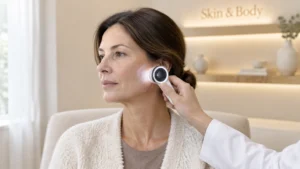
We understand that addressing scars and stretch marks can be a vulnerable experience. Our clinic is designed as a retreat: a clean, modern, European-style environment where your privacy and comfort are paramount.
Clients are not looking for a machine. They are looking for a strategy. They want to know that the entire architecture of their skin is being assessed, not just the visible line on the surface. That is the essence of our philosophy: move beyond the basic, use layered clinical thinking, and pursue measured improvement with precision.
Frequently Asked Questions: Expert Insights
How many sessions are required for significant scar revision?
Structural remodeling is an investment, not a quick fix. While you may notice visible textural change after your first visit, meaningful revision usually comes from a series. A course of 3 to 5 treatments is common, though some Clients require a broader collagen induction plan. These are typically spaced 4 to 6 weeks apart to align with the natural cycle of collagen synthesis.
Is the treatment painful?
We prioritize Client comfort above all else. We utilize high-strength topical numbing and integrated cooling technologies. Most Clients describe the sensation as localized prickling or warmth. Our boutique environment is deliberately paced, so you are never hurried through the process.
Can old stretch marks be treated?
Yes. While striae rubrae: the fresher red or purple inflammatory marks: are generally more responsive, mature striae albae can also be revised with a layered protocol. Depending on tissue behaviour, that may include resurfacing, RF microneedling, selected picosecond support, and procedures focused on discolouration or surface texture where appropriate. The goal is revision and refinement, not complete erasure, and results vary by skin type, mark depth, body area, and healing response.
What is the downtime?
Because our technologies are fractional, they leave bridges of healthy skin intact. That keeps downtime more manageable. You can expect roughly 2 to 4 days of social downtime, where the skin may appear pink or sunburn-like, followed by about a week of intensive hydration and barrier support.
Do Stretch Marks Go Away?
Stretch marks usually fade and become less prominent, but they do not typically resolve entirely without treatment. That is why AGE LESS approaches them as a revision issue, not an erasure fantasy. The realistic objective is smoother texture, reduced contrast, and stronger-looking skin over time.
Why Am I Getting Stretch Marks When I’m Not Even Overweight?
Because striae are not caused by body fat alone. They can develop with rapid muscle growth from weight training, adolescent growth spurts, hormonal fluctuation, inherited skin fragility, pregnancy, and medications that weaken the skin, including long-term corticosteroid exposure. The issue is dermal stress and tissue resilience, not a simple number on the scale.
How Do I Stop My Stretch Marks?
Think in two lanes: prevention and revision. Prevention focuses on gradual weight change where possible, sustained hydration inside and out, barrier-supportive body care, good protein and micronutrient intake, and sun protection so marks do not darken in contrast. Revision is about timing. Early intervention while marks are still red or purple gives the clinic more inflammatory-stage biology to work with. Even then, striae cannot always be prevented, particularly when rapid growth or hormonal change is involved.
Can Vitamin C Get Rid of Stretch Marks?
No definitive evidence shows that Vitamin C eliminates stretch marks. What it does do is matter profoundly to skin quality because Vitamin C is required for collagen synthesis. It can support the skin topically through stable derivatives such as ascorbic acid and systemically through diet. In practice, it is a supportive tool, not a standalone cure.
Invest in Your Body: The Path Forward
You do not have to accept the “history” written on your skin as fixed and final. If you are ready to move beyond temporary fixes and invest in the long-term architecture of your skin, AGE LESS offers a more exacting path.
Treatment plans are bespoke. Your skin is not one-size-fits-all, and your protocol should not be either. From advanced diagnostic tools to regenerative inside-out support, the clinic provides evidence-based care designed for measured, cumulative change.
Take the first step in your journey.
Contact Rachel today at 236 485 7826 to schedule your initial Complimentary Evaluation. Discover how skin revision can be planned with precision while serving Esquimalt & the greater Victoria area from a boutique clinic focused on clinical elegance, comfort, and long-term outcomes.