

Evil #5 in the 7 Evils Series
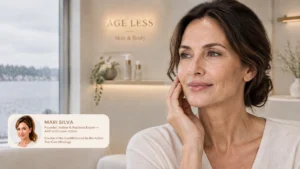
You can moisturize diligently, protect your skin from the sun and invest in excellent skincare: and still watch your complexion develop fine lines, dullness and a distinctive cross-hatched texture.
The missing piece may be glycation.
Glycation is a metabolic process in which excess sugar molecules attach themselves to proteins, including collagen and elastin. Over time, these altered proteins form Advanced Glycation End-products, or AGEs. The acronym is especially appropriate: AGEs accumulate gradually, remain stubbornly embedded in tissue and contribute to the visible breakdown associated with skin aging.
This is not a superficial problem. Your skin tells the story of your metabolism.
Metabolic health and skin health are connected. When blood glucose remains elevated or fluctuates excessively, the chemistry of the dermal matrix changes. Collagen fibres become less flexible, less resilient and more vulnerable to mechanical stress. The result is not simply “dry skin.” It is a structural problem.
What glycation does to collagen
Healthy collagen behaves like a supple, supportive network. It provides tensile strength, elasticity and architectural support throughout the dermis.
Glycation changes that network.
Sugar binds to collagen through a non-enzymatic reaction. The modified collagen then develops abnormal cross-links, making the fibres increasingly stiff and brittle. Because collagen turns over slowly: some dermal collagen may remain for many years: it becomes a long-term record of cumulative metabolic stress.
Glycated collagen cannot flex and rebound normally. It also becomes more difficult for the body to repair and remodel. The tissue loses some of its youthful spring, while wrinkles become more fixed and deeply etched.
AGEs may also contribute to a yellowed or sallow cast. Some AGE compounds have a brownish or yellowish colour, and their accumulation can add to the dull, uneven appearance often associated with mature, environmentally stressed skin.

The familiar cross-hatched pattern around the cheeks, mouth and lower face can reflect this process: collagen that has become less like a living support system and more like a brittle, over-cross-linked mesh.
A moisturizer can improve hydration at the surface. It cannot undo protein cross-linking in the dermis.
That distinction matters.
The executive escape hatch: treat skin as a performance signal
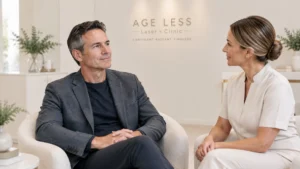
For many men: and for women who have no interest in beauty clichés: the most useful way to understand glycation is through performance.
Skin is an external signal of internal conditions. Persistent fatigue, poor sleep, chronic stress, high alcohol intake, low activity and unbalanced nutrition can influence inflammation, oxidative stress and glucose regulation. Those same factors may affect how efficiently the skin repairs itself.
This is not about shame, restriction or pursuing perfection. It is about recognising that metabolic health is part of your visible presence.
Your skin is the largest organ you carry into every meeting, presentation and conversation. It communicates energy, vitality and care before you say a word. A clear, resilient complexion is not vanity; it is part of how you show up.
The executive escape hatch is simple: begin with the highest-value changes. Prioritize stable nutrition, adequate protein, movement, sleep and appropriate medical guidance if you have concerns about glucose regulation or metabolic health. Then address the established structural and pigment changes with a treatment plan calibrated to your skin.
You do not need a complicated beauty regime. You need a considered strategy.
Why AGE LESS does not use a one-size-fits-all repair plan
At AGE LESS Laser+Clinic, the objective is not to erase every line or force every face into the same polished template. The objective is to improve the quality, tone and resilience of the skin while respecting your anatomy, schedule, comfort and long-term goals.
That requires assessment.
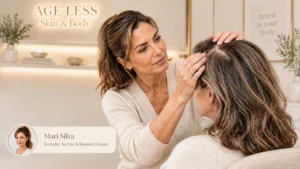
Glycation rarely appears in isolation. Photoaging, pigment accumulation, reduced collagen synthesis, inflammation, dehydration and hormonal changes may all overlap. Treating only the surface can produce a temporary improvement without addressing the broader tissue environment.
AGE LESS therefore approaches glycated, dull or structurally tired skin through layered technologies. Each modality performs a different role.
QUANTUM Bright & LUMINOUS non-ablative fractional lasers
The QUANTUM Bright & LUMINOUS non-ablative fractional lasers are designed to stimulate controlled regenerative activity without removing the entire surface of the skin.
A fractional approach treats selected microscopic columns while leaving surrounding tissue intact. This supports a more comfortable recovery and encourages the skin’s natural remodelling response. Depending on your assessment, the protocol may be used to address uneven tone, fine lines, texture and the early signs of collagen decline.
The goal is not aggressive surface damage. It is measured stimulation.
Pico 1064 Q-Switched YAG Clear Lite Lift laser
The Pico 1064 Q-Switched YAG Clear Lite Lift laser uses extremely short pulses to target unwanted pigment through photoacoustic energy rather than bulk heating.
That distinction matters for mature or pigment-prone skin. Shattering excess pigment while limiting unnecessary thermal load can support a more controlled brightening and rejuvenation strategy. The treatment may be considered when dullness, sun-related discoloration, uneven tone and early laxity appear together.
The name suggests a lighter approach, but the planning remains clinical. Correct wavelength, energy, spacing and skin preparation matter more than promotional language.

The AGE LESS Deep Herbal Peel
The AGE LESS Deep Herbal Peel offers a different route to resurfacing. It is selected when the skin requires more concentrated renewal of the surface layers, including concerns such as dull texture, accumulated dead cells and certain forms of uneven pigmentation.
A deeper peel demands disciplined preparation and aftercare. Peeling, redness and sensitivity can occur, and sun protection becomes non-negotiable. It is not appropriate for every skin type, season, medical history or lifestyle schedule.
That is exactly why it should never be treated as an impulse service. A proper consultation determines whether a peel, non-ablative laser, staged combination or restorative preparation phase makes the most sense.
Layer the plan; respect the biology
Glycation is stubborn because it develops over time. A single appointment cannot eliminate years of cross-linking, and no reputable clinic should promise that it can.
What a well-designed protocol can do is improve the visible environment around that damage. One modality may address pigment. Another may stimulate dermal remodelling. A peel may renew the surface. Medical-grade home care, sun protection and metabolic support help protect the progress.
Visible change can begin early, but regenerative results continue to develop over months. Maintenance remains essential because aging does not stop after a treatment course.
That is an investment, not a quick fix.
AGE LESS has been serving Esquimalt and the greater Victoria area for over 20 years, combining advanced European-style clinical esthetics with a quieter, more personal standard of care. The experience is deliberately personal, built around your own assessment rather than a fixed sequence.
“The person you get to see is the same person you get to deal with.”
That personal continuity matters. It gives you room to ask direct questions, understand your options and choose a plan that fits your actual life.
The practical takeaway
Reduce the metabolic drivers you can control. Protect your skin from ultraviolet exposure. Do not expect moisturizer to reverse glycated collagen. And do not accept a generic treatment plan simply because it is convenient for the clinic.
If your skin has become dull, yellowed, stiff or cross-hatched, start with an assessment. The right strategy may involve one technology: or a carefully staged combination of several.
A quiet shift in how you care for your metabolism and your skin can change how you present yourself for years to come.
Frequently asked questions
What is glycation and how does it affect skin?
Glycation is a non-enzymatic reaction in which sugar molecules bind to proteins such as collagen and elastin. The resulting Advanced Glycation End-products create abnormal cross-links that reduce flexibility, increase stiffness and contribute to wrinkles, dullness and loss of resilience.
Can moisturizer reverse glycated collagen?
No. Moisturizer can support surface hydration and barrier comfort, but it cannot remove AGE-related cross-links from long-lived dermal collagen. A comprehensive approach may combine lifestyle support, sun protection, professional skin treatments and appropriate home care.
Which AGE LESS treatment is best for glycated skin?
There is no universal answer. The QUANTUM Bright & LUMINOUS non-ablative fractional lasers, Pico 1064 Q-Switched YAG Clear Lite Lift laser and AGE LESS Deep Herbal Peel address different aspects of skin quality. A clinician should assess your pigmentation, texture, laxity, sensitivity, medical history and downtime preferences before recommending a protocol.
Is glycation only a cosmetic concern?
No. Glycation is connected to broader metabolic processes, particularly elevated blood glucose, oxidative stress and inflammation. Skin findings are not a diagnosis, but persistent concerns about glucose regulation or metabolic health should be discussed with a qualified healthcare professional.
Explore AGE LESS Laser+Clinic or read more clinical skin and body insights.