


A new skin growth can catch your attention, especially if it appears somewhere visible or starts rubbing against clothing. Many adults develop common growths over time, including seborrheic keratoses, skin tags and milia. But appearance alone is not a reliable basis for deciding what a growth is or how it should be handled.
The considerate first step is assessment, not assumption. If the nature of a growth is uncertain, or it has changed, it should be referred to an appropriate healthcare professional for an opinion before any removal is considered. No responsible Appearance Enhancement approach should treat a spot simply because it looks familiar.
What benign skin growth removal involves
The phrase skin growth removal (benign) describes a process that begins with understanding what is being considered, not choosing a technique first. Some common growths may not need treatment at all. Others may be suitable for removal after an appropriately qualified professional has established that they are benign and discussed the benefits and risks with you.
A skin tag, a small keratin-filled milium and a raised seborrheic keratosis are not interchangeable. They differ in structure, location and how they may respond to treatment. Even two growths that look similar can call for different decisions.
Removal is not appropriate for every concern. A growth that is changing, bleeding without a clear cause, persistently sore, ulcerated or simply difficult to identify needs to be seen by an appropriate healthcare professional. If there is doubt, referral comes before cosmetic treatment. That protects your health and avoids treating an uncertain spot in a way that could obscure important information.
What to expect from an assessment
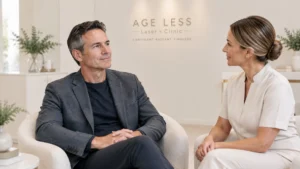
A careful appointment starts with conversation. You can explain when you first noticed the growth, whether it has changed or become irritated, and what you hope to address. The clinician may ask about its location, relevant health information, medications, previous skin treatments and your history of healing or scarring.
The area can then be considered in context, including its size, surface, position and appearance. Skin tone matters, as does the site: a growth in an area exposed to friction is different from one close to the eye or another delicate feature. Your personal healing history matters too. A tendency toward raised scars or lingering pigment changes can affect the risk discussion.
This assessment does not mean that a treatment will automatically be offered. Its purpose is to clarify whether the concern falls within scope, whether the next step should be an outside healthcare opinion, and what options may be appropriate if benign status is established. No two growths should be treated the same way simply because they share a general label.
Personalisation protects your skin
Treatment planning should account for the growth, its location and your skin, rather than follow a one-size-fits-all template. Different removal methods can create different effects on surrounding tissue. The least traumatic suitable option may be preferable, but the right choice depends on the individual case and the professional responsible for care.
Your skin tone is part of that conversation. After skin irritation or injury, some people experience a temporary or persistent change in pigmentation. Scarring is another possibility, particularly for people with a history of raised scars. These risks do not mean that treatment is always unsuitable; they do mean that realistic advice and informed consent are essential.
Ask what method is being considered, who will perform it, what healing may involve and what signs should prompt follow-up. If a growth is uncertain, atypical or changing, do not proceed with destructive cosmetic treatment before receiving the appropriate opinion.
Healing and aftercare: realistic expectations
Aftercare depends on the method used and the area treated. Follow the instructions provided by the professional who performs the procedure. In general, protect the area from unnecessary friction, keep it clean as directed, and avoid picking at a scab, blister or healing surface. Ask before applying active skincare products or makeup to the treated area.
Healing takes time. You may notice temporary redness, tenderness, a small scab or a change in skin colour, depending on the procedure. The final appearance cannot be promised in advance, and no before-and-after result should be guaranteed. Once the skin has healed, sun protection can help limit unwanted pigment changes.
Contact the treating professional if healing concerns you or if you notice increasing pain, spreading redness, unusual discharge or a significant change at the site. If the original growth returns or changes, seek a fresh assessment rather than assuming the cause.
A bespoke conversation at AGE LESS
AGE LESS Laser+Clinic takes an assessment-led, bespoke approach to Appearance Enhancement. The clinic’s focus is on evidence-based guidance and long-term skin wellbeing, not quick fixes or automatic treatment plans. A complimentary initial assessment and confidential consultation can help you discuss your concern, understand whether it may be within the clinic’s scope, and determine whether an outside healthcare opinion is the appropriate next step.
That distinction matters. A consultation is not a promise that a growth will be removed at AGE LESS. When a concern needs further review, referral is the responsible course. Clients should feel comfortable asking questions and taking time to decide.
For those exploring skin longevity Victoria BC, this careful approach fits a wider inside-out and outside-in view of skin health: understand the concern, consider your individual needs, and choose the next step based on sound guidance rather than guesswork.
AGE LESS Laser+Clinic serves Clients across Greater Victoria and wider Southern Vancouver Island, including Esquimalt, Oak Bay, View Royal, Langford, Sidney, Brentwood Bay and the lower Cowichan Valley. The clinic has welcomed Clients at its boutique Esquimalt location since 2024.
AGE LESS Laser+Clinic, Trusted by Thousands Since 2000
To arrange a complimentary initial assessment and confidential consultation, visit Suite #101, 1246 Esquimalt Rd, Victoria, BC V9A 3N8. Call or text 250 514 7032.
Frequently asked questions
Do all benign skin growths need to be removed?
No. Some common growths may be left alone if they are not troublesome. Whether removal is appropriate depends on the specific concern, your preferences and an assessment by an appropriately qualified professional.
Can a skin growth be removed if I am not sure what it is?
Uncertainty should be addressed before removal. If the growth cannot be confidently considered benign, seek an appropriate healthcare opinion rather than proceeding with cosmetic treatment.
Does skin tone affect the treatment discussion?
Yes. Skin tone and personal healing history can influence the chance of temporary or longer-lasting pigment changes or scarring. Discuss these factors before deciding on any procedure.
How long will the area take to heal?
Healing varies with the method used, the location and individual skin response. The treating professional should explain likely aftercare and what changes warrant follow-up; no single timeline applies to everyone.
Can I book a consultation if I live outside Esquimalt?
Yes. AGE LESS welcomes Clients from across Greater Victoria and Southern Vancouver Island, including Oak Bay, View Royal, Langford, Sidney, Brentwood Bay and the lower Cowichan Valley.

Mari Silva, Founder & Resident Expert at AGE LESS Laser+Clinic, Creator of the CosMEDermal Rx Bio-Active Skin Care Mixology