


Perimenopause is not a problem to hide or a phase you must simply tolerate. It is a significant biological transition: and the more clearly you understand what is changing, the more confidently you can respond.
Your skin may feel drier or less resilient. Sleep may become lighter. Your energy, mood, hair, body composition, and stress response may shift in ways that feel unfamiliar. Sometimes these changes arrive gradually. Sometimes they appear all at once.
Perimenopause is personal. There is no universal timeline, symptom list, or perfect solution.
This introductory article begins the AGE LESS Perimenopause campaign. The series will explore seven common areas of change: skin, sleep, stress resilience, energy, hair, body composition, and overall well-being: without reducing your experience to a single symptom or a one-size-fits-all protocol.
First, understand what perimenopause means
Perimenopause is the transitional stage before menopause. During this time, ovarian hormone activity becomes more variable, menstrual cycles may change, and symptoms can emerge before your periods become noticeably irregular.
For some people, the transition begins in the 40s. For others, it starts earlier or later. It may last for several years, and symptoms can fluctuate from month to month.
Common changes include:
- Irregular, shorter, longer, heavier, or lighter periods
- Hot flashes or night sweats
- Interrupted sleep and daytime fatigue
- Irritability, anxiety, or mood changes
- Brain fog or difficulty concentrating
- Increased skin dryness, sensitivity, or laxity
- Changes in hair density or texture
- Shifts in body composition
- Joint discomfort or reduced recovery after exercise
- Changes in sexual comfort or desire
You may experience several of these changes, only one, or none of the commonly discussed symptoms. You may also have regular periods while noticing other changes. That is why your lived experience matters more than a generic checklist.
The Canadian Menopause Society and the Menopause Foundation of Canada both provide useful education and symptom-tracking resources. Bring questions and observations to your healthcare provider rather than trying to interpret every change alone.
The problem: too many women are told to “just get through it”
When your sleep deteriorates, your skin changes, your concentration falters, and your body feels less predictable, it is easy to assume you are doing something wrong.
You are not.
You are also not required to accept vague advice, disconnected solutions, or a rushed, high-volume experience that treats every concern the same way. Perimenopause affects multiple systems at once. A narrow approach often misses the connections between them.
Poor sleep can affect stress resilience. Ongoing stress can influence energy, recovery, and skin health. Hormonal fluctuations can affect how your skin holds moisture and responds to appearance-enhancement sessions. Changes in body composition can alter how clothing fits, how you move, and how you feel in your own body.
The right starting point is not “What is wrong with me?” It is “What has changed, and what support would help me feel more like myself?”
The solution: take an inside-out and outside-in approach
At AGE LESS, perimenopause support begins with conversation, context, and careful observation. The goal is not to promise a quick fix. The goal is to understand your priorities and create a personalized approach that respects your health history, comfort, schedule, and expectations.
That may include:
- Discussing visible skin changes and your current home-care routine
- Exploring how sleep, stress, nutrition, and energy affect your appearance and confidence
- Considering whether biofeedback or integrative wellness support is appropriate for your goals
- Selecting appearance-enhancement sessions based on skin condition, not age alone
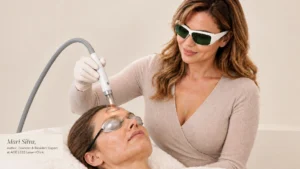
- Using layered technologies when appropriate to address more than one tissue level
- Building a maintenance plan that supports gradual, natural-looking progress
A layered approach may combine modalities that support surface renewal, collagen activity, hydration, firmness, or muscle re-education. The exact combination depends on your assessment. No clients should receive a pre-selected sequence simply because it worked for someone else.
This is where AGE LESS differs from generic med-spas and high-volume clinics. The approach is deliberately bespoke, evidence-informed, and designed around long-term regenerative results rather than temporary changes.
Evidence matters: but so does the whole person
Perimenopause is a legitimate biological transition, but not every new symptom automatically comes from hormones. Sleep apnea, thyroid conditions, iron deficiency, medication effects, depression, anxiety, and other health concerns can overlap with perimenopause symptoms.
That is why a thoughtful approach includes appropriate medical assessment. AGE LESS does not replace your physician, nurse practitioner, gynecologist, or other healthcare provider. If you experience very heavy or prolonged bleeding, bleeding after 12 months without a period, sudden severe symptoms, chest pain, or significant mood changes, seek medical attention promptly.
Your healthcare provider may discuss hormonal and non-hormonal options based on your symptoms, medical history, risks, and preferences. You deserve individualized care: not a prescription or recommendation made without understanding your circumstances.
AGE LESS can complement that process by focusing on the areas within its scope: skin health, appearance enhancement, stress support, and practical strategies that help you feel more informed and supported during change.
A personal reason this matters to AGE LESS
Founder Mari Silva approaches healthy aging through both clinical esthetics and whole-person wellbeing. As a woman approaching her seventh decade, a cancer survivor at 37, and someone who once lived a 24/7 work-focused lifestyle, she understands that sustainable wellbeing requires more than appearance-focused solutions.
Her own evolution has included nutrition, supplementation, and hobbies that restore balance: squash, golf, skating, portrait painting, and gardening. That perspective informs the AGE LESS philosophy: support the person, not only the visible concern.
The clinic’s mind-body perspective also grew from a deeply personal family experience. After a manager’s mother received a cancer diagnosis, Quantum Biofeedback was used as complementary support during her recovery, alongside appropriate medical care. It was not a replacement for oncology treatment. It reinforced the importance of viewing health as interconnected: while remaining clear about the role and limits of every modality.
What you can do now
Start with observation, not self-criticism.
For the next few weeks, note:
- When your period begins and ends
- Sleep quality and nighttime waking
- Changes in mood, focus, or stress response
- Energy levels and exercise recovery
- Skin, hair, and body-composition changes
- Any symptom that affects your confidence or daily routine
Then choose one or two priorities. You do not need to solve everything in a single appointment.
Bring your notes to your consultation. If you would also like to discuss your skin, appearance, stress, or wellness goals, request a conversation with AGE LESS. A complimentary in-depth consultation can help clarify which options may be suitable and which may not.

What this perimenopause series will explore
The following articles will look more closely at:
- Skin changes and regenerative appearance enhancement
- Sleep disruption and restoration
- Stress resilience and nervous-system support
- Energy, fatigue, and recovery
- Hair changes and scalp support
- Body composition and changing contours
- Overall wellbeing, confidence, and healthy aging
Each topic will connect practical, evidence based – functional & integrative wellbeing education with the AGE LESS inside-out/outside-in philosophy. You will find clear options, appropriate boundaries, and a reminder that your experience does not need to resemble anyone else’s.
Frequently asked questions
What is perimenopause?
Perimenopause is the transitional stage before menopause, when ovarian hormone activity becomes more variable and menstrual cycles or other body systems may change. Symptoms can begin before periods become irregular and vary significantly from person to person.
How do I know whether my symptoms are related to perimenopause?
Symptoms such as cycle changes, sleep disruption, hot flashes, mood changes, brain fog, skin changes, and shifts in energy may occur during perimenopause. However, other health conditions can create similar symptoms.
Can AGE LESS help with perimenopause?
AGE LESS provides personalized clinical esthetics, appearance enhancement, biofeedback, and integrative wellness support within its professional scope. These services may complement your broader healthcare plan, but they do not diagnose or medically manage perimenopause.
Do I need to change everything at once?
No. Begin with your most disruptive concern and choose realistic next steps. Tracking your symptoms, improving relevant lifestyle habits, arranging medical advice re considering beginning HRT and exploring a supportive, proactive AGE LESS visit can happen gradually.
Is there one best approach to perimenopause?
No. The most appropriate approach depends on your symptoms, goals, health history, preferences, and response over time. Individualized care is more useful than a fixed protocol.
Perimenopause is a new biological chapter, but it is not the end of your vitality, confidence, or sense of self. What would change if you stopped treating your symptoms as personal failures and started proactively addressing them as useful information towards finding better balance
When you are ready, begin with a conversation about what you are noticing: and what you would like to feel, see, and experience next.