

If you searched for “skin rejuvenation Victoria,” you have already encountered the problem: the phrase now covers everything from a relaxing facial to intensive dermal resurfacing. It no longer tells you what a treatment actually does, which layer of skin it reaches, or whether it matches your priorities.
Effective skin rejuvenation begins with assessment, not shopping.
At AGE LESS Laser+Clinic, skin rejuvenation means creating a personalized plan to improve the visible quality, resilience and function of your skin over time. The approach combines evidence-based clinical esthetics, European-style technologies, appropriate home care and realistic treatment sequencing. The goal is not to make you look like someone else. It is to help your skin look healthier, stronger and more rested while remaining recognizably yours.
A facial and a regenerative skin plan are not the same thing
A facial primarily supports the surface of the skin. It can cleanse, hydrate, exfoliate and temporarily improve luminosity. That has value, particularly when the skin barrier needs comfort and support.
However, surface hydration cannot correct every change associated with ageing. Skin laxity, fine lines, uneven pigment and textural scarring involve deeper biological processes. The dermis contains collagen and elastin, the structural proteins responsible for much of the skin’s firmness, elasticity and recovery. With age and cumulative environmental exposure, collagen production slows, existing fibres degrade and elastin becomes less organized.
That is why regenerative skin care focuses on controlled improvement of skin quality, rather than simply creating a short-lived glow. The treatment must match the tissue level involved.
Five visible concerns can represent five different problems
Ageing skin rarely presents as one isolated issue. A Client may notice several of the following at once:
- Pigment and uneven tone caused by cumulative sun exposure, hormonal influences or post-inflammatory changes.
- Texture, including enlarged pores, fine lines, roughness or acne scarring.
- Laxity, resulting from changes in collagen, elastin and supporting tissues.
- Volume changes, which can alter facial proportions and shadowing.
- Barrier dysfunction, which may present as dryness, sensitivity, redness or reduced tolerance for active products.
A single treatment cannot address all five problems equally well. A 45-year-old with melasma and a relatively firm facial structure needs a different plan from a 62-year-old whose primary concern is laxity and reduced dermal resilience.
This is why AGE LESS does not use a one-size-fits-all protocol. The clinic’s skin rejuvenation services are selected according to the dominant concern, skin condition, tolerance, lifestyle and desired level of downtime.

The foundations come first
Before selecting a device or procedure, the skin needs a stable foundation. A compromised barrier can make otherwise appropriate treatments more irritating and recovery less predictable.
The first priorities usually include:
- Gentle cleansing without excessive stripping.
- A moisturizer suited to the skin’s hydration and barrier needs.
- Daily broad-spectrum sun protection.
- Careful introduction of active ingredients rather than using several new products at once.
- A review of current inflammation, sensitivity, pigmentation patterns and previous treatment response.
Sun protection is not an optional finishing step. Ultraviolet exposure continues to break down collagen and stimulate unwanted pigment, working against the results of in-clinic care.
Inside-out factors also matter. Sleep disruption, chronic stress, nutritional inadequacy, hormonal change and unstable blood sugar can influence inflammation, healing and the skin’s ability to maintain structure. These factors do not replace professional skin care, but they affect how well the skin responds to it.
AGE LESS also offers age management and longevity services that can support a broader functional approach to healthy ageing.
What advanced skin rejuvenation modalities actually do
Radiofrequency skin tightening
Radiofrequency delivers controlled thermal energy into targeted tissue. The purpose is not to create an instant surgical lift. It is to encourage gradual dermal remodelling and improve the appearance of mild to moderate laxity and skin firmness.
Results develop progressively because collagen remodelling takes time. Treatment settings, tissue depth, skin condition and spacing between sessions all matter. More heat is not automatically better, and treatment should be selected carefully for the individual.
Laser and light treatments
Laser and light-based technologies can target uneven tone, sun-related pigment, redness and selected textural concerns. Different wavelengths interact with tissue differently, so “laser rejuvenation” is not one single treatment.
Pigment-prone skin requires particular care. Melasma, post-inflammatory pigmentation and recent sun exposure can change the risk profile and treatment sequence. A responsible plan may prioritize pigment stability and barrier health before using a more intensive modality.
AGE LESS provides photo facial services as one option within a broader assessment-led approach.
Collagen induction therapy
Collagen induction therapy creates controlled micro-injuries that activate the skin’s natural repair response. It can be useful for fine lines, uneven texture, enlarged pores and selected types of scarring.
The treatment does not replace good home care, and it should not be performed over an unstable barrier or active skin concern without appropriate professional guidance. Results appear gradually as new collagen develops and reorganizes.
Biostimulators
Biostimulators belong to a medical injectable category designed to encourage the body’s own tissue response. They may have a place in selected treatment plans, but they are not a universal substitute for skin quality, barrier care or appropriate structural assessment.
A Client considering this category should receive clear information about credentials, product indications, risks, expected results and maintenance. No single intervention should be presented as the answer to every form of facial ageing.
Combinations work best when they are sequenced
Layered European technologies can address different tissue levels, but layering does not mean stacking multiple aggressive procedures into one appointment.
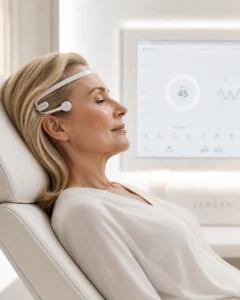
One treatment may support collagen synthesis. Another may improve surface pigment. A third may support muscle re-education or visible tone. The sequence should protect the barrier and allow the skin to respond before the next step is introduced.
More treatment is not the same as better treatment.
Over-treating can increase inflammation, worsen pigment irregularity, compromise the barrier and make the skin appear more reactive rather than more resilient. This is especially important for Clients with melasma, rosacea tendencies, sensitive skin or a history of prolonged redness after procedures.
Advanced diagnostic tools, detailed consultation, skin history, visual assessment and treatment photographs help inform the plan. They do not replace medical evaluation when a concern falls outside the scope of clinical esthetics.
What results should you expect?
Some Clients notice improved hydration, brightness or smoothness after the first visit. Deeper changes require patience.
Barrier improvements may appear over days or weeks. Pigment and tone often require a carefully spaced series. Collagen remodelling and skin tightening develop over several weeks to months. The most honest marker of success is not dramatic overnight change. It is skin that looks like yours, only healthier, more even and better supported.
Results also require maintenance. A customized mini-maintenance plan can help preserve the initial investment while addressing the ongoing ageing process. Maintenance may include periodic in-clinic treatments, seasonal adjustments, home care reviews and continued sun protection.
How to choose a plan in Victoria, BC, Oak Bay and Sidney
Ask these questions before committing to any treatment:
- What specific concern is this treatment designed to address?
- Which layer of skin does it reach?
- How many sessions are realistic?
- What downtime and aftercare are required?
- How will pigment risk and barrier health be managed?
- What is the maintenance plan?
- Who performs the treatment, and what training do they have?
- What happens if your skin responds differently than expected?
AGE LESS Laser+Clinic — Trusted by Thousands Since 2000. The clinic has served Clients across the Greater Victoria area, from Saanich, Brentwood Bay and Sidney to downtown and the Westshore, and the wider Southern Vancouver Island and lower Cowichan Valley, for more than two decades, and since 2024 has welcomed them from its boutique clinic in Esquimalt. As another trust signal, AGE LESS has maintained the same pricing for 17 years.
The clinic provides appearance-enhancing clinical esthetics and does not diagnose or treat medical conditions. Any new, changing, bleeding or non-healing lesion requires assessment by an appropriate medical professional.
Regenerative skin care is not a race toward the most intensive procedure. It is a structured investment in healthier-looking skin, guided by evidence, timing and individual response. Start with what your skin needs now. Build from there.