
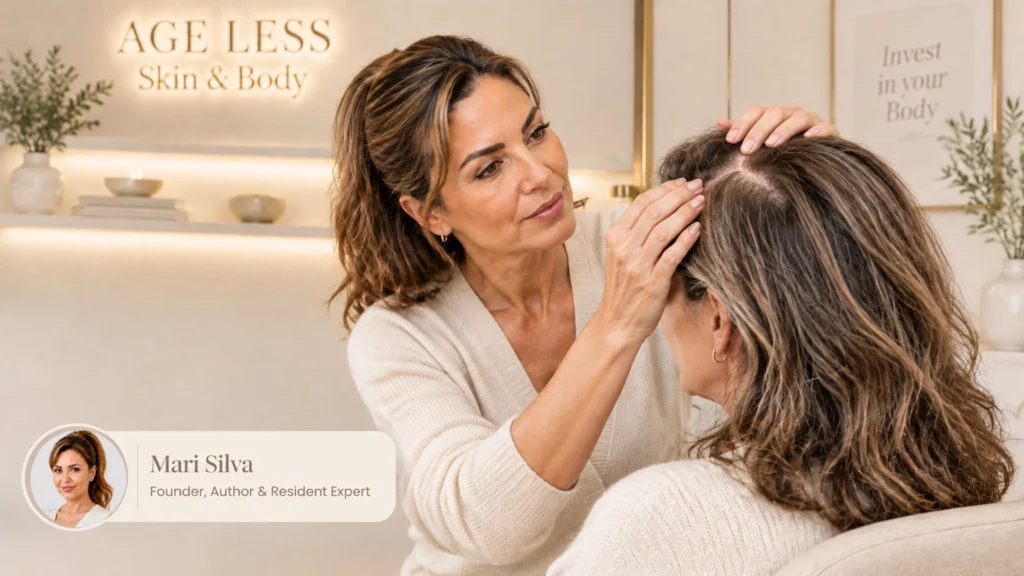
Hair thinning after 40 can feel sudden, even when the changes have been building gradually. You may notice a wider part, less fullness at the crown, or more strands in your brush. Perimenopause can coincide with these changes, but hormones are only one possible piece of the picture.
The useful first step is to identify the pattern and likely cause, not to guess or buy supplements at random. Hair shedding and progressive thinning can have different triggers, and they may happen at the same time. A considered plan starts with your health history and scalp, then matches care to what the assessment finds.
Why hair density can change during perimenopause
As hormone levels fluctuate and eventually decline, some people notice changes in hair texture, growth, or fullness. At the same time, age-related follicle sensitivity and inherited tendencies can contribute to female-pattern hair loss. This often appears as gradual thinning across the top or crown, or a part that slowly looks wider. The frontal hairline may remain relatively intact.
Hormonal change does not explain every case of perimenopause hair thinning. A period of increased shedding can follow illness, surgery, significant stress, a major change in weight, restrictive eating, or a medication change. Thyroid conditions and iron deficiency can also contribute. Hair breakage from heat, chemical processing, extensions, or tight hairstyles can make density appear reduced without the same process happening at the follicle.
Timing offers clues. Increased shedding may become noticeable a few months after a trigger. Patterned thinning tends to progress more gradually. Because the causes can overlap, a careful history and scalp assessment are more useful than assuming that menopause alone is responsible.
What to notice before seeking help
Make a note of when you first noticed the change and whether you see more shedding or a gradual change in coverage. Consider recent illness, surgery, stress, diet or weight changes, new medications, menstrual changes, family history, and any scalp symptoms. Take photographs of your part and crown in consistent lighting every month; avoid comparing pictures taken from different angles or under different conditions.
A family doctor or nurse practitioner can assess possible medical causes and decide whether targeted blood tests are appropriate. Depending on your history and examination, they may consider tests such as a blood count, ferritin, or thyroid testing. Supplements are not a substitute for this assessment. Iron and other nutrients should be taken when a deficiency or clinical need supports them, rather than as a guess.
Seek medical assessment promptly for sudden or rapidly progressing loss, distinct bald patches, scalp pain or burning, marked itching, redness, scaling, crusting or pustules, or areas that look smooth and shiny. These signs can point to conditions that need medical diagnosis; some forms of inflammatory or scarring hair loss require early attention.
What actually helps
The right approach depends on the cause. For confirmed female-pattern hair loss, topical minoxidil is a commonly used option. It takes time to assess, may not suit everyone, and generally needs ongoing use to maintain its effect. A doctor or pharmacist can help you review the product label, suitability, possible irritation, and other health considerations.
When a medical issue, nutritional deficiency, or medication is contributing, treating or reviewing that factor may be part of the plan. Do not stop a prescribed medication without discussing it with the prescriber. Hormone therapy should not be started solely to address hair thinning; decisions about menopause care belong in an individualized conversation with a qualified health professional.
Gentle hair habits can also help protect the hair you have. Reduce repeated high heat and harsh chemical processing, avoid styles that pull tightly at the roots, and choose a balanced eating pattern that provides adequate nourishment. These steps support hair care but do not replace treatment for an underlying condition.
Where non-surgical hair loss treatments fit
Some people also explore non-surgical hair loss treatments, including low-level light therapy. Evidence and individual response vary, so it should not be presented as a guaranteed solution or a substitute for medical evaluation. A consultation can clarify what the service involves, whether it may fit your goals, and how progress will be reviewed.
At AGE LESS Laser+Clinic, hair and scalp care is approached individually rather than as a one-size-fits-all package. A clinic consultation can discuss available supportive options, including low-level light therapy, while medical concerns such as sudden loss, scalp inflammation, or possible deficiencies should be assessed by an appropriate health professional. Learn more about the clinic’s hair restoration approach.

A series of treatments is an investment in ongoing care, not a one-visit promise. Before beginning, ask what the approach is intended to address, how progress will be monitored, and when the plan should be reviewed. Individual results vary, and no treatment can guarantee regrowth.
A personalized plan, not a quick fix
A thoughtful plan may combine medical evaluation, appropriate home care, and supportive clinic services, but only when each part has a clear purpose. AGE LESS is a Boutique Clinic serving Esquimalt and the greater Victoria area for over 20 years. Clients from Victoria, Langford, and Sidney can explore a personalized consultation in a calm Boutique Retreat setting.
If your hair density has changed, start by documenting the pattern and speaking with a qualified health professional. Then consider supportive options that fit your diagnosis, comfort, and priorities. Clarity comes first; the treatment plan follows.
Frequently asked questions
Is hair thinning after 40 always caused by perimenopause?
No. Hormonal changes may coincide with thinning, but patterned hair loss, temporary shedding, breakage, medical conditions, nutritional deficiencies, and medication effects can also contribute. An assessment can help distinguish among them.
What is the difference between shedding and patterned thinning?
Shedding often means more hairs are coming out than usual, sometimes after a trigger. Patterned thinning usually develops gradually, often affecting the part or crown. Both can occur together, so timing and scalp examination matter.
What non-surgical hair loss treatments are available?
Options may include topical products recommended by a health professional and supportive services such as low-level light therapy. Suitability and evidence differ by person. Discuss expected timelines, limitations, and follow-up before starting an Appearance Enhancement treatment.
When should I seek medical advice for hair loss?
Seek advice for sudden or rapid loss, distinct patches, scalp pain or burning, significant inflammation or scaling, or smooth shiny areas. A family doctor or nurse practitioner can assess possible causes and refer you for specialist care when appropriate.
Do you serve clients outside Victoria?
AGE LESS Laser+Clinic serves Esquimalt and the greater Victoria area, including clients from Saanich, Brentwood Bay, Sidney, Langford, and across Southern Vancouver Island. A consultation can help determine whether the clinic’s supportive services fit your needs.